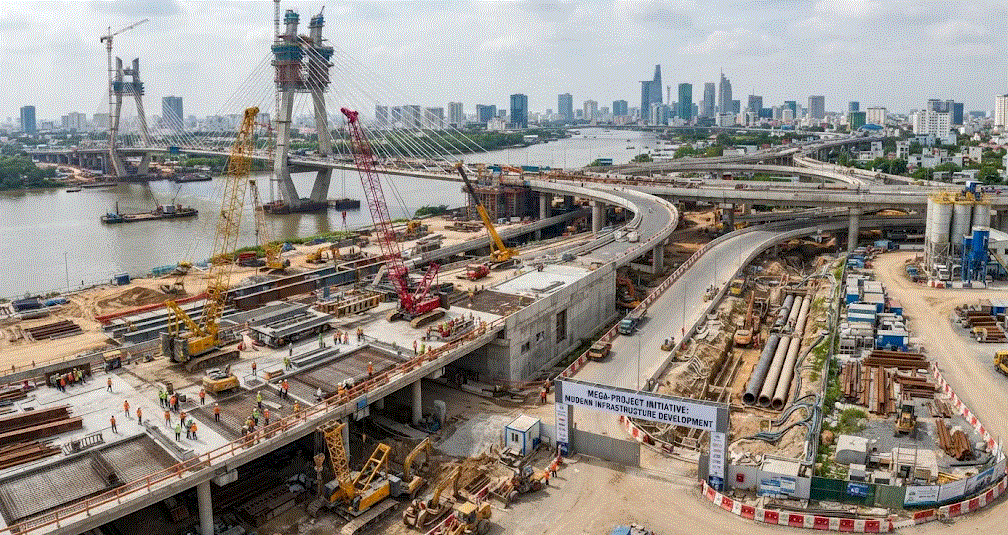
Stand on a bustling city overpass during the morning rush, and you are witnessing an invisible symphony. Beneath your feet, post-tensioned concrete girders absorb the rhythmic vibration of thousands of commuters. Hidden in the soil far below, fiber-optic cables pulse with terabytes of financial data, while pressurized water mains quietly quench the thirst of millions.
We rarely notice these systems until something goes wrong—a burst pipe floods an intersection, a bridge closes for emergency repairs, or a localized blackout brings a neighborhood to a standstill. Yet, infrastructure development is the quiet engine of human civilization. It is the physical and organizational backbone that allows economies to breathe, communities to connect, and daily life to function without friction.
For decades, building infrastructure meant pouring more asphalt and erecting taller steel structures. Today, the industry is undergoing a radical transformation. From smart sensors embedded in wet concrete to climate-resilient coastal barriers, the way we design, fund, and construct our foundational systems is evolving rapidly.
What Exactly is Infrastructure Development?
At its core, infrastructure development refers to the foundational construction, modernization, and maintenance of essential public and private facilities. Civil engineers typically divide this massive umbrella into two distinct categories:
- Hard Infrastructure: The tangible, physical networks required for a modern industrial nation to operate. This includes transportation systems (highways, railways, ports, and airports), energy grids, water supply networks, and telecommunications.
- Soft Infrastructure: The institutions that maintain the economic, health, and cultural standards of a population, such as public schools, hospitals, emergency services, and regulatory frameworks.
While soft infrastructure relies heavily on policy and human capital, hard infrastructure is where the heavy machinery hits the dirt. And right now, the dirt is moving faster than ever.
The Invisible Shift: From “Build More” to “Build Smarter”
Ask any veteran site superintendent who has spent thirty years in heavy civil construction, and they will tell you that the job site of today barely resembles the one they started on.
Consider the story of a major highway expansion project in the American Midwest a few years ago. Historically, paving crews had to wait days—sometimes weeks—for concrete core samples to cure in a lab before confirming the road was strong enough to bear traffic. Delays were routine, and budgets bled money while heavy equipment sat idle. On this particular project, however, engineers dropped wireless, quarter-sized sensors directly into the wet concrete mix. Using maturity method testing—a technique that calculates concrete strength in real time by monitoring its internal temperature—the crew received an alert on their tablets just 36 hours later. The concrete had hit its target strength. They opened the lane four days ahead of schedule, saving taxpayers hundreds of thousands of dollars.
This is the new face of infrastructure development. We are no longer just building static structures; we are building responsive ecosystems.
Decoding the Tech on Today’s Job Sites
To understand where the construction sector is headed, it helps to demystify a few terms that have moved from engineering textbooks onto active construction sites:
- Digital Twins: Imagine having a living, breathing video game replica of a physical bridge or subway tunnel. A digital twin isn’t just a 3D blueprint; it is a virtual model fed by real-time data from physical sensors. If a hairline crack forms in a dam’s spillway or traffic patterns shift dramatically on a suspension bridge, the digital twin flags the anomaly before the human eye could ever spot it.
- BIM (Building Information Modeling): Think of BIM as a shared digital brain for everyone on a project. Instead of architects, structural engineers, and electricians working off separate paper blueprints—and accidentally routing a water pipe straight through an electrical conduit—BIM merges every layer into one collaborative 3D model. Clashes are caught on a computer screen before a single shovel breaks ground.
- Geosynthetics: Building a road over soft, marshy soil used to mean digging out thousands of tons of mud and hauling in expensive gravel. Today, crews roll out high-strength synthetic fabrics and grids—called geosynthetics—between soil layers. They act like snowshoes for heavy roads, distributing weight evenly so the pavement doesn’t sink or buckle over time.
The Three Pillars Driving Modern Projects
Across the globe, whether a municipality is upgrading a century-old sewer system or breaking ground on a high-speed rail corridor, three overarching priorities dictate how projects get greenlit.
1. Resilience Against Extreme Weather
Infrastructure built in the 1950s and 1960s was designed using historical weather data that no longer applies. Culverts sized for yesterday’s rainstorms are easily overwhelmed by today’s flash floods, and asphalt blends engineered for mild summers are softening under record-breaking heatwaves.
Modern infrastructure development demands climate resilience. Following the devastation of Hurricane Sandy in 2012, New York City didn’t just rebuild its damaged coastal parks; it reimagined them. Through projects like the East Side Coastal Resiliency initiative, engineers elevated entire waterfront parks by eight to ten feet, embedding massive, retractable floodgates directly into the landscape. On sunny days, residents enjoy bike paths and green space. When a storm surge threatens, those gates swing shut, turning a neighborhood park into a fortified seawall.
2. The Energy Transition and Grid Modernization
You cannot run a 21st-century economy on a 20th-century power grid. As electric vehicles replace combustion engines and renewable energy sources like wind and solar scale up, our electrical infrastructure faces a massive bottleneck.
Traditional power grids were designed as one-way streets: a centralized coal or gas plant generated electricity and pushed it outward to homes and factories. Renewable energy, however, is decentralized and intermittent. A sunny afternoon in the desert or a windy night offshore produces surges of power that must be captured, stored, and routed thousands of miles away. Consequently, some of the most critical infrastructure development happening right now involves high-voltage direct current (HVDC) transmission lines—superhighways for electricity that lose far less energy over long distances than traditional alternating current lines.
3. Retrofitting Aging Foundations
While ribbon-cutting ceremonies for gleaming new airports grab the headlines, some of the most heroic engineering happens underground and out of sight. In cities like London, Boston, and Tokyo, crews are routinely tasked with performing open-heart surgery on transit tunnels and water mains that are well over a hundred years old—all without shutting down the city above.
Using trenchless technology, contractors can now rehabilitate crumbling underground pipes without digging up busy city streets. One common method, Cured-in-Place Pipe (CIPP) lining, involves inserting a flexible, resin-saturated felt tube into an existing damaged pipe. Once positioned, engineers inflate the tube with water or air and cure it using hot water or ultraviolet light. Within hours, a brand-new, seamless structural pipe hardens inside the old one, extending its lifespan by another fifty years with minimal disruption to local businesses or traffic.
The Hurdles: Why Building Is Harder Than It Looks
If the technology exists to build faster, safer, and smarter, why do major infrastructure projects so frequently run over budget and behind schedule? Ask anyone managing a mega-project, and they will point to a familiar trio of roadblocks.
| Challenge | The Reality on the Ground | How the Industry is Adapting |
| Supply Chain Volatility | Custom electrical transformers, structural steel, and specialized aggregates can face lead times stretching over a year. | Early contractor involvement (ECI) allows builders to lock in material orders during the design phase rather than waiting for final blueprints. |
| The Skilled Labor Gap | Experienced crane operators, welders, and heavy civil engineers are retiring faster than younger workers are entering the trades. | Increased adoption of modular, off-site prefabrication, where bridge sections and utility vaults are built in controlled factory settings. |
| Permitting & Red Tape | Environmental reviews and land acquisition can sometimes take longer than the physical construction itself. | Phased permitting processes and clearer public-private partnerships (P3s) that align government oversight with private sector efficiency. |
Financing remains an equally complex puzzle. Because public budgets are perpetually stretched thin, governments increasingly rely on Public-Private Partnerships (P3s). In a P3 model, a private consortium finances, designs, builds, and sometimes operates a public asset—like a toll highway or a water treatment plant—for a set period, recouping its investment through user fees or long-term government payments before handing the asset back to the public. When structured well, P3s transfer construction risk away from taxpayers and incentivize builders to prioritize long-term durability over cheap, short-term fixes.
The Human Element: Building for Communities, Not Just Vehicles
Perhaps the most profound lesson the construction industry has learned over the past half-century is that infrastructure should never divide the people it is meant to serve.
During the mid-20th century highway boom, urban planners frequently carved massive interstate corridors straight through vibrant, historic neighborhoods. While these highways sped up suburban commutes, they often severed local business districts, trapped communities behind concrete walls, and concentrated air pollution in residential areas.
Today, a growing movement in civil engineering focuses on reconnecting communities. In cities like Dallas, Seattle, and Utrecht in the Netherlands, planners are capping sunken highways with lush “deck parks” or tearing down aging elevated freeways altogether to restore walkable boulevards and waterways.
When Klyde Warren Park opened in downtown Dallas—built directly atop a recessed eight-lane freeway—skeptics questioned whether anyone would spend time sitting over rushing traffic. Instead, the five-acre green space stitched two disconnected halves of the city back together, sparking billions of dollars in surrounding economic development and proving that great infrastructure does more than move cars; it elevates human connection.
Looking Ahead
Infrastructure development is ultimately an act of optimism. When engineers calculate load tolerances for a new suspension bridge or lay down water mains sized for a city’s projected population fifty years from now, they are making a tangible investment in generations they will never meet.
The challenges ahead are undeniable—from adapting coastlines to rising seas to overhauling power grids for a decarbonized world. Yet, armed with smarter materials, real-time data, and a deeper appreciation for how built environments shape daily life, the builders of today are laying down far more than concrete and steel. They are constructing the stage upon which the next century of human progress will unfold.
Note: Grid Infrastructure News: Latest Trends, Developments, and Future Insights (2026 Guide)