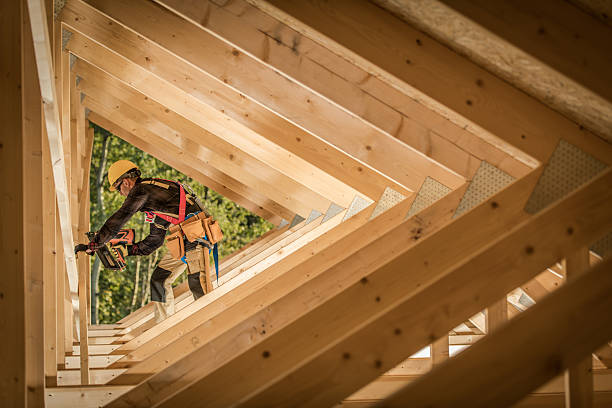
The numbers are staggering. Buildings and their construction account for roughly one third of global greenhouse gas emissions while construction and demolition waste represents up to forty percent of the worlds total solid waste stream. Cement production alone is responsible for about eight percent of global carbon dioxide emissions making it one of the most carbon intensive industries on the planet. As the global building stock is projected to double by 2050 the choices made in building construction today will determine the environmental legacy of entire generations.
Yet within this challenge lies an extraordinary opportunity. The construction sector stands at a crossroads where the growing urgency of climate action meets unprecedented innovation in materials methods and design thinking. A greener future for building construction is not merely possible it is already taking shape in projects around the world. This transformation requires three simultaneous shifts rethinking what we build with reimagining how we build and reshaping the mindsets that guide our decisions.
Materials Reimagining What We Build With
The Carbon Promise of Bio Based Materials
Perhaps the most exciting frontier in sustainable building construction involves materials that grow rather than those that are manufactured. Bio based materials products made partly from biomass typically from plants offer a compelling advantage they can store carbon captured from the atmosphere during their growth. This is a stark contrast to conventional materials like steel cement and aluminum whose production generates significant emissions.
Hemp is emerging as a particularly versatile option. Hempcrete a mixture of hemp hurds and lime creates insulating breathable walls that regulate indoor humidity and resist fire. Companies have developed pre cured hemp blocks that simplify the construction process. These blocks have been used in large residential buildings supermarkets and even a six story apartment complex in southwestern France. One cubic meter of hemp lime material can sequester the equivalent of approximately two hundred thirty eight pounds of carbon dioxide making it a carbon negative option.
Wood remains the most common bio based material but other innovative options are gaining traction. Waste wool a byproduct of textile manufacturing can be transformed into insulating composite panels for exterior building retrofits. Research demonstrates that these panels offer structural thermal and moisture performance comparable to conventional fiberboard while achieving a carbon negative profile. Straw bamboo and even seed husks ground and pressed into cladding panels represent additional possibilities for sustainable building construction.
Innovation in Traditional Materials
While bio based materials offer tremendous promise the industry cannot simply abandon concrete and steel overnight. This reality has driven significant innovation in making these traditional materials more sustainable. Geopolymer cement which uses calcined clays as a precursor offers high performance without the considerable CO2 emissions of ordinary Portland cement. Researchers have developed calcined clay and hemp hurd composites that show potential for both compressive strength and thermal performance suggesting the possibility of functionally graded materials for various construction applications.
Another breakthrough involves replacing steel reinforcing bars with geogrids lightweight corrosion resistant grid materials. Steel rebar production is highly energy intensive and polluting and steel is susceptible to corrosion that limits concrete structure lifespans to forty to eighty years. Geogrids offer an alternative that could reduce global CO2 emissions by approximately four percent if widely adopted. They are not vulnerable to corrosion improve earthquake resistance by increasing ductility and cyclic loading resistance and have lower weight to strength ratios.
Upcycling Waste into Building Materials
The circular economy is transforming how we think about waste in building construction. Researchers have created low carbon building blocks by amending fly ash cement with rice husk biochar. These blocks meet international standards for use under severe conditions while achieving compressive strengths of eight to twelve megapascals. Importantly with six percent biochar content the blocks showed significant reductions in toxic metal leaching aluminum dropped by seventy two percent selenium by forty eight percent barium by fifty eight percent and chromium by fifty three percent. This addresses both the carbon footprint of cement and the environmental risks of fly ash.
The principle extends to entire buildings. Innovative firms demonstrate that material sourcing can begin before a project is even defined. When museums replace sections of their buildings firms have salvaged discarded marble and later used it as pavers. On vacant lots they have salvaged self seeded trees seasoned the wood and incorporated it back into projects on the same site. This approach treats materials not as consumables but as resources with enduring value and represents a fundamental shift in how building construction can approach material stewardship.
Methods Transforming How We Build
Adaptive Reuse and the Wisdom of Retention
The most sustainable building is the one never built. Adaptive reuse finding new purposes for existing structures cuts the embodied carbon required to extract natural resources manufacture and transport materials and build new structures. Detroit redevelopment offers a compelling example. Former fire department headquarters became a boutique hotel. Abandoned factory buildings were transformed into mixed use apartments with retail and co working space.
Adaptive reuse produced approximately twenty five thousand new apartments across the United States in recent years representing a significant increase year over year. A record breaking number of apartments are now in development many converting office spaces that were never reclaimed after the pandemic. Beyond environmental benefits this approach boosts affordable housing renovations typically require less time and money than new construction with savings passed on to residents. This strategy is becoming an essential component of sustainable building construction.
Climate Responsive Design
Instead of designing buildings that fight their environment climate responsive design works with it. Architects orient structures to block or capture sun and wind selecting materials that naturally reduce energy use and embodied carbon. Major corporate headquarters feature unique breathable facades with automated louvers that open and close to provide natural ventilation. Combined with central atrium designs this approach reduces energy use by about thirty five percent compared to typical office buildings.
This holistic approach has evolved into what some firms call architecture driven by data and technology. Leading technology campuses integrate similar principles. The key insight is that mechanical systems for heating cooling ventilation and lighting can be substantially reduced when buildings are designed in harmony with their specific climate and site conditions. This represents a fundamental rethinking of how building construction approaches environmental performance.
Industrialization and Digital Transformation
Modular construction and industrialization are accelerating sustainability in building construction. This approach can reduce CO2 emissions by thirty percent while shortening construction timelines. The shift toward modular methods brings greater logistical control and predictability reducing waste and improving quality.
Artificial intelligence is playing an increasingly important role in optimizing processes predicting issues and improving quality. Digital tools enable more precise building reducing errors that lead to waste and rework. These technologies also support the integration of sustainable practices by providing data that helps teams make better decisions about materials energy and resource use. The combination of industrialization and digital tools is transforming what is possible in green building construction.
Mindsets Shifting How We Think
From Liability to Legacy
The most profound shift required for greener building construction is cultural. For generations the industry has operated on a linear model extract materials build structures demolish them and send the waste to landfills. This approach treats buildings as temporary conveniences rather than long term assets.
Forward thinking practitioners articulate a different philosophy we should not create a liability for future generations with the materials we source. If a building reaches the end of its life the materials should not create an environmental catastrophe when dismantled. This means designing with the full lifecycle in mind choosing materials that can return to the earth or be reused and creating buildings that can adapt to changing needs over time. This mindset shift is essential for advancing sustainable building construction.
Collaborative Design and Client Engagement
Sustainable building construction often begins with conversations between designers and clients. Every project should start with a dialogue about how clients envision living in their spaces balanced with what is best for the site and community. The goal is to both meet and transcend the expectations and desires of clients by responding to the site the surrounding community and even local industries that can provide regional materials and skilled labor.
This collaborative approach reveals that sustainability does not require clients to arrive with everything figured out. The best projects often involve working through constraints and there will always be constraints. These constraints become opportunities to create architecture that is both deeply personal and built to last. Engagement and collaboration are cornerstones of successful green building construction.
Expanding the Policy Conversation
Government policy plays a crucial role in shaping building construction. International summits on sustainable buildings have highlighted that most governments prioritize building performance over materials focusing on electricity demand operational energy use and cooling. While these areas matter the materials conversation still has ground to gain before it carries the same policy fluency and confidence.
This matters because material choices influence emissions jobs local industry wellbeing and the quality of the built environment. The Global South represents a deciding area for transformation as a large share of future buildings and infrastructure will take shape there. Urban growth housing demand and infrastructure expansion give unusual weight to material choices that will shape the character resilience and social value of cities for decades. Policy must evolve to support sustainable building construction at scale.
Looking Forward A Mosaic of Solutions
The path to greener building construction will not follow a single trajectory. It is better understood as a mosaic than a singular pathway with different strategies appropriate for different contexts regions and project types. What matters is a stronger alignment between climate goals human wellbeing and the quality of urban growth with greater sensitivity to context and consequence.
Practitioners are already showing the way. Designers and architects are bringing the discussion back to fundamentals smarter structural decisions more efficient planning smarter use of space and earlier choices that reduce material intensity from the start. In some cases bio based materials are central to this thinking. In others the lesson is broader centered on restraint design quality and judgment as core tools of transformation.
The direction of travel for building construction is being shaped right now. The choices being reinforced today will influence the sector for years to come. By embracing new materials adopting smarter methods and shifting our mindsets we can build a greener future one where buildings contribute not just to shelter and commerce but also to climate mitigation ecological restoration and human wellbeing. The path forward is clear and the time to act is now.