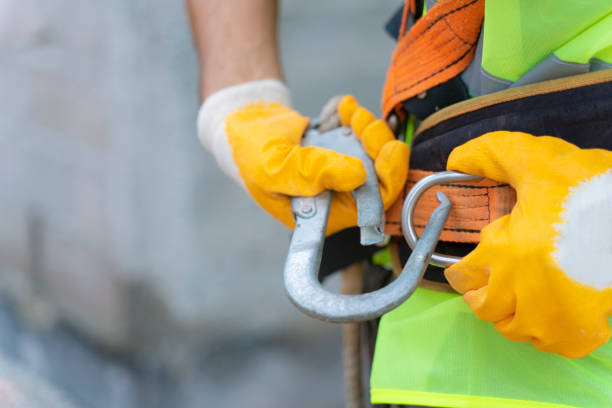
Construction safety has come a long way. Hard hats, high visibility vests, fall protection, and mandatory training are now standard on most job sites. Yet accidents still happen, and many of them are caused by risks that rarely make it into safety manuals or toolbox talks. These hidden dangers are the ones nobody talks about, and they are often the most dangerous because they go unnoticed until it is too late.
This article explores the hidden safety risks on every job site. By understanding these overlooked hazards, construction professionals can take meaningful steps to protect workers, reduce incidents, and build a stronger safety culture.
Why Hidden Risks Are the Most Dangerous
Visible risks are easy to manage. A missing guardrail, an unsecured ladder, or a worker without a harness immediately draws attention. Hidden risks are different. They operate quietly in the background, often disguised as normal working conditions or accepted industry practices.
The problem with hidden risks is that they become normalized. When something is part of everyday work, people stop seeing it as a hazard. Over time, this leads to complacency, and complacency leads to accidents. The most effective way to improve construction safety is to identify and address these invisible threats before they cause harm.
1. Mental Health and Fatigue
One of the biggest hidden safety risks in construction is mental health. The industry has one of the highest rates of suicide, depression, and substance abuse of any sector. Long hours, physical exhaustion, job insecurity, and time away from family all take a toll.
Fatigue is closely linked to mental health. Tired workers make mistakes. Reaction times slow down, judgment becomes impaired, and attention to detail drops. A worker who is struggling with anxiety or depression may be physically present but mentally distracted, which increases the risk of accidents.
Most construction safety programs focus on physical hazards and ignore mental wellbeing. This is a serious gap. Companies that address mental health, provide support resources, and manage workloads effectively see fewer incidents and healthier teams.
2. Normalized Risk Taking
Every job site has its own unwritten rules. Sometimes these rules encourage shortcuts. Workers may skip a step because it saves time, or because that is how it has always been done. Over time, these shortcuts become accepted practice.
This is known as normalized risk taking. It happens gradually and often goes unnoticed by management. A worker might balance on an unsecured surface, bypass a lockout procedure, or carry too much weight up a ladder. Individually, these actions seem minor. Collectively, they create a culture where safety is optional.
The danger is that normalized risk taking spreads. New workers learn from experienced ones, and bad habits are passed down. Breaking this cycle requires strong leadership, clear communication, and a willingness to challenge established practices.
3. Poor Communication Across Trades
Construction sites bring together multiple trades, subcontractors, and suppliers. Each group has its own priorities, schedules, and ways of working. When communication breaks down between these groups, safety risks increase.
A common example is when one trade leaves a hazard behind for another. An electrician might leave exposed wiring, or a crew might remove a guardrail temporarily and forget to replace it. If this information is not communicated, the next group walks into danger without warning.
Language barriers make this worse. Many construction sites employ workers who speak different languages. Safety briefings conducted in only one language leave entire crews without critical information. Effective construction safety requires clear, multilingual communication and a system for handing over hazards between teams.
4. Time Pressure and Production Goals
Deadlines drive the construction industry. Clients want projects finished on time, and delays cost money. This pressure filters down to the job site, where workers are pushed to work faster and longer.
Time pressure is a hidden safety risk because it is rarely acknowledged as one. When production goals conflict with safety procedures, safety often loses. Workers skip breaks, rush through tasks, and take risks they would normally avoid. Supervisors may look the other way because they are under pressure too.
The solution is not to ignore deadlines but to plan realistically. Projects that build safety into their schedules from the start are less likely to experience accidents. Rushing is never worth the cost of an injury or a fatality.
5. Inadequate Onboarding for New Workers
New workers are among the most vulnerable on any job site. They are unfamiliar with the environment, the equipment, and the routines. Even experienced workers who are new to a particular site face risks because every site has its own hazards and procedures.
Inadequate onboarding is a hidden safety risk because it is often treated as a formality. A quick tour, a signed form, and a brief orientation are not enough. Proper onboarding should include hands-on training, mentorship, and clear explanations of site specific hazards.
Research consistently shows that workers are at higher risk of injury during their first weeks on a new job. Investing in thorough onboarding is one of the most effective ways to improve construction safety.
6. Silenced Workers
In many construction environments, workers are reluctant to speak up about safety concerns. They fear being seen as difficult, slow, or disloyal to the team. This silence hides risks that could easily be fixed if they were reported.
A culture of silence is dangerous. It means near misses go unreported, hazards remain unaddressed, and small problems grow into serious incidents. Workers on the ground often see risks that managers miss. When their voices are ignored, everyone is less safe.
Building a speak up culture requires trust. Workers need to know that reporting a hazard will not lead to punishment or ridicule. Leaders must actively encourage feedback and act on it quickly.
7. Invisible Chemical and Environmental Exposures
Some safety risks are literally invisible. Dust, fumes, and vapors can cause long term health problems without any immediate symptoms. Silica dust, asbestos, welding fumes, and solvent vapors are common on construction sites, yet they are often overlooked because their effects are not immediate.
Exposure to these substances can lead to chronic lung disease, cancer, and other serious conditions. Unlike a fall or a cut, the damage accumulates over years. This makes it easy to ignore until it is too late.
Protecting workers from invisible exposures requires proper ventilation, respiratory protection, monitoring, and education. It also requires a shift in mindset, from reacting to immediate dangers to preventing long term harm.
8. Complacency Among Experienced Workers
Experience is valuable, but it can also be a liability. Workers who have done the same task for years may become complacent. They stop noticing hazards because they have seen them a hundred times before. They take shortcuts because nothing bad has happened yet.
Complacency is one of the hardest hidden risks to address because it feels like competence. Experienced workers often resist safety reminders, believing they already know the risks. The reality is that familiarity breeds carelessness, and even the most skilled workers can make mistakes.
Regular refresher training, rotating tasks, and encouraging workers to look at familiar environments with fresh eyes can help combat complacency. Safety is not a one time lesson. It is an ongoing practice.
How to Uncover Hidden Safety Risks
Finding hidden risks requires more than inspections. It requires listening, observing, and asking questions. Walk the job site regularly and talk to workers about what worries them. Look for patterns in near misses and minor incidents, because they often point to bigger problems.
Encourage workers to report hazards without fear. Review your safety data for trends that might indicate underlying issues. And be willing to challenge long standing practices, even if they seem normal.
Creating a culture where safety is everyone’s responsibility is the most powerful tool for uncovering hidden risks. When workers feel empowered to speak up and leaders respond with action, the invisible becomes visible.
Final Thoughts
Construction safety is not just about helmets, harnesses, and signage. The most dangerous risks are often the ones nobody talks about. Mental health struggles, normalized risk taking, poor communication, time pressure, and complacency all contribute to accidents in ways that are easy to overlook.
By acknowledging these hidden risks, construction professionals can take real steps to address them. The result is a safer, healthier, and more productive industry. The first step is simply to start the conversation.