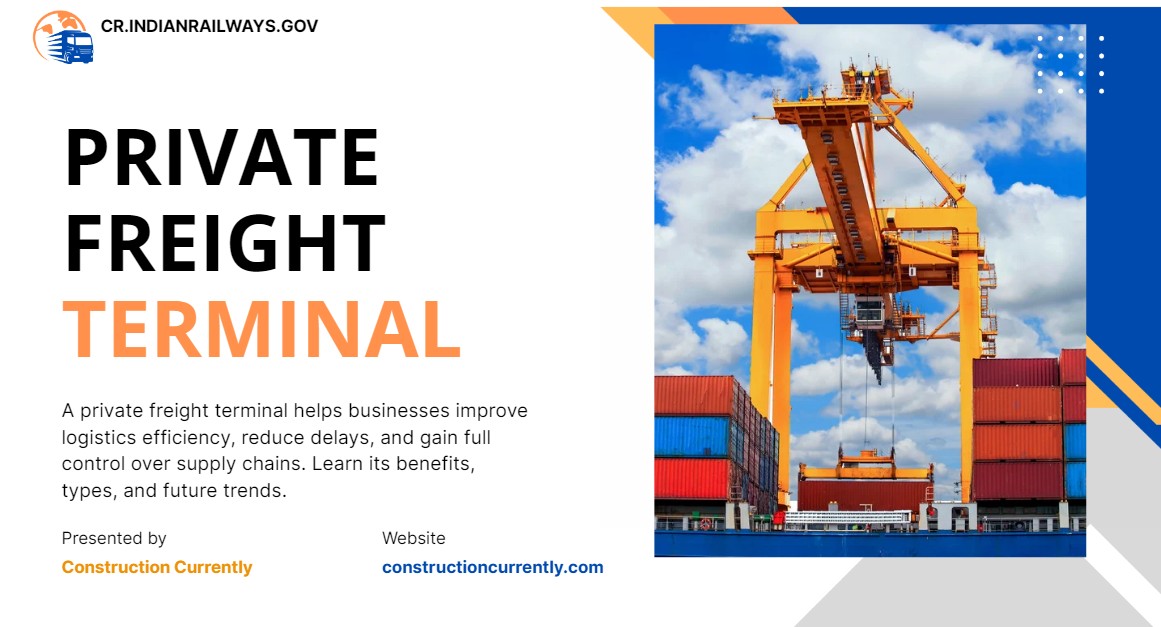
In today’s fast-moving global economy, logistics efficiency has become more important than ever. Businesses are constantly searching for ways to reduce delays, cut costs, and gain better control over their supply chains. One solution that is gaining attention is the private freight terminal.
A private freight terminal is not merely a storage or a transit facility, it is a strategic asset which enables companies to smooth operations, delivery times as well as the overall logistics performance. This article will provide an insight on what a private freight terminal is, how it operates, the advantages it has and why it is increasingly becoming a necessity to the modern business.
What Is a Private Freight Terminal?
A private freight terminal is a logistics facility owned or operated by a private company rather than a government or public authority. It is used for handling, storing, and transferring goods efficiently between different modes of transportation such as trucks, trains, ships, or even air cargo.
Key Features
- Dedicated infrastructure for specific business needs
- Controlled access and security
- Faster loading and unloading systems
- Integration with supply chain technology
Unlike public terminals, a private freight terminal offers greater flexibility and customization, making it ideal for companies with high-volume or specialized logistics needs.
Why Businesses Are Investing in Private Freight Terminals
Greater Control Over Operations
One of the main reasons companies invest in a private freight terminal is control. Businesses can manage schedules, workforce, and cargo handling without depending on third-party operators.
Reduced Delays
Public terminals often face congestion and delays. A private freight terminal eliminates this issue by offering dedicated space and priority handling.
Cost Efficiency Over Time
While the initial investment may be high, a private freight terminal can significantly reduce long-term logistics costs by minimizing storage fees, delays, and handling charges.
Types of Private Freight Terminals
Rail Freight Terminals
These terminals are directly linked with the railway networks and hence they are convenient in the transportation of bulk goods over long distances.
Road-Based Terminals
They are truck transport designed to be used in regional distribution and last mile delivery.
Intermodal Terminals
Intermodal private freight terminal will facilitate the movement of goods between various modes of transport through smooth transfers and enhance efficiency as well as minimize handling time.
Advantages of a Privately operated freight terminal.
Improved Efficiency
A personal freight terminal provides a quicker service of cargo by means of high-quality equipment and streamlined operations. This saves time and increases the productivity.
Enhanced Security
Goods are safe in the hands of better security systems, such as surveillance cameras, restricted access, and dedicated personnel, which are found in the privacy of the terminal.
Customization
Depending on the needs, businesses are able to design their own freight terminal to suit their requirements, be it temperature-controlled storage or some specific handling devices.
Greater Inventory Control.
The real-time inventory management and shipment tracking of operations enable companies to have direct control over their operations.
Role in Modern Supply Chains
The modern supply chain is complex and requires speed, transparency, and reliability. A private freight terminal plays a crucial role in achieving these goals.
Integration with Technology
Many private terminals now use advanced systems like:
- Warehouse management software
- Real-time tracking systems
- Automated loading equipment
These technologies help businesses stay competitive and meet customer expectations.
Supporting E-commerce Growth
With the rise of online shopping, the demand for fast and reliable delivery has increased. A private freight terminal helps companies handle large volumes of goods efficiently, making it easier to meet tight delivery deadlines.
Challenges of Private Freight Terminals
While the advantages are significant, there are also some challenges to consider.
High Initial Investment
Building a private freight terminal requires significant capital for land, infrastructure, and equipment.
Maintenance Costs
Ongoing maintenance and staffing costs can add up over time.
Regulatory Compliance
Companies must follow local and international regulations related to transportation, safety, and environmental standards.
How to Set Up a Private Freight Terminal
Location Selection
Choosing the right location is critical. It should be close to major transport routes such as highways, railways, or ports.
Infrastructure Development
The terminal should include:
- Loading docks
- Storage facilities
- Transport connections
- Security systems
Technology Integration
Modern systems should be implemented to ensure efficient operations and data tracking.
Skilled Workforce
Hiring trained personnel is essential for smooth and safe operations.
Future Trends in Private Freight Terminals
The future of the private freight terminal is bright, and it has a number of trends that determine its evolution.
Automation
Efficiency and labor cost reduction with the help of automated systems and robotics is being employed.
Sustainability
It is common to find that many companies are making green initiatives, including the use of renewable energy and minimization of emission.
Digital Transformation
AI and data analytics are also assisting companies in making operations and demand projections more efficient.
Why Private Freight Terminals Matter Today
In a competitive market, businesses need reliable logistics solutions to stay ahead. A private freight terminal offers:
- Faster delivery times
- Better cost management
- Improved customer satisfaction
It is not just a logistics facility but a strategic investment that can drive long-term growth.
Conclusion
A freight terminal is a private one and it is becoming an essential component of the modern logistics and supply chain management. It gives businesses more control, enhanced efficiency and capability of fulfilling the increasing customer demands.
Even though it is an expensive venture to start with, it will prove worthwhile in the long run since companies who plan to expand their operations and remain competitive in the current dynamic market will have acquired a valuable investment.
FAQs
1. What are the purposes of a private freight terminal?
There is a privately owned freight terminal whereby goods between various transportation modes are stored, handled and transferred effectively.
2. What is the difference between it and a public terminal?
A company owns a private freight terminal, which is less congested and offers a lot of control as opposed to the public terminals.
3. Is a private freight terminal very costly to construct?
It is true that it might need a huge start up capital investment, but it may save on future expenses.
4. To whom should a private freight terminal be invested?
The greatest beneficiaries are businesses that have large-scale logistics or shipping volumes.
5. Is it possible to use small business freight terminals?
Small businesses need not construct one but can contract with the firm that has got private terminals.